 Artfantastix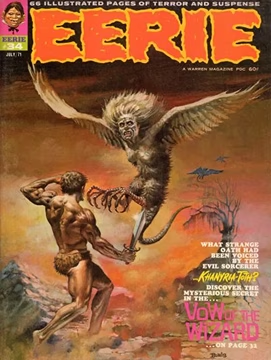
Comic Covers
Boris Vallejo’s early comic covers marked the beginning of his rise in fantasy art. They introduced the dramatic anatomy, powerful figures and mythic intensity that would soon become his signature style.
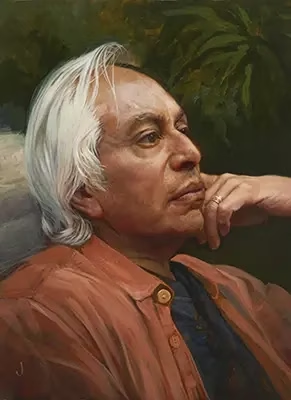
A lifetime dedicated to fantasy art
“As a young kid, four years old… I was drawing on the walls of my mother's kitchen.” Boris Vallejo
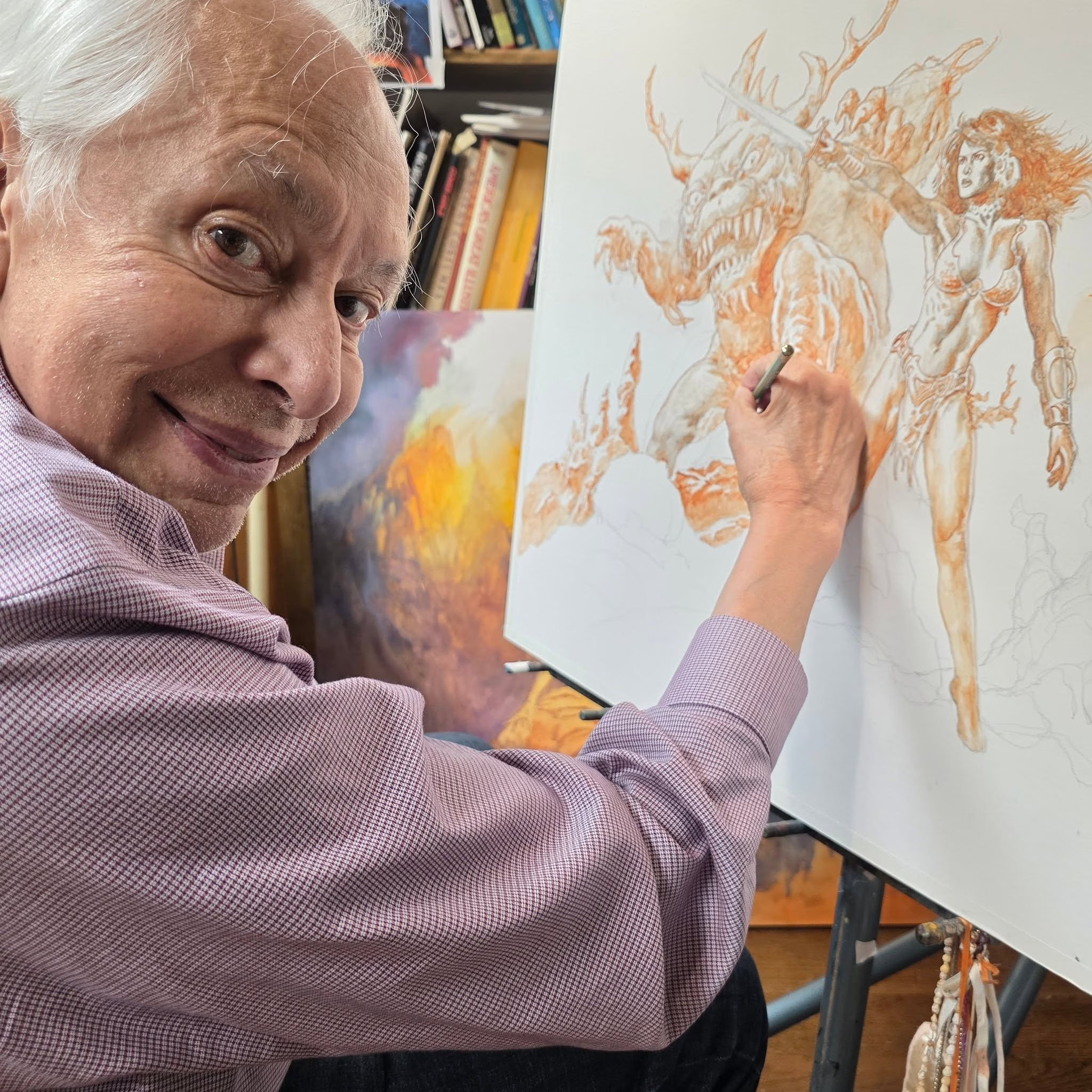
Boris Vallejo built one of the most recognisable careers in fantasy illustration from little more than an instinct for drama, a profound understanding of anatomy, and an immigrant’s willingness to bet everything on a single suitcase of drawings. Over six decades, his paintings transformed paperback covers, comics, and advertising campaigns into portals where muscular heroes, impossible creatures, and heroines struggled for survival across the canvas.
This page follows that journey in full — from a middle-class childhood in Peru, through a one-way ticket to New York with eighty dollars in his pocket, to a partnership with Julie Bell that continues in their shared studio today.
Browse Boris's paintings in the archive →| Born | 8 January 1941 · Lima, Peru |
|---|---|
| Education | Escuela Nacional Superior Autónoma de Bellas Artes, Lima |
| Arrived in the USA | 13 September 1964 |
| Known for | Fantasy, science-fiction and adventure cover art |
| Partners | Doris Vallejo (married • circa 1978; 2 children, Dorian and Maya; divorced 1993) · Julie Bell (married, painting partner) |
| Studio | Allentown, Pennsylvania |
| Honours | Inkpot Award (1978) · British Fantasy Award (1979) · multiple Hugo & Spectrum Awards · two Chesley Awards (2011, 2014) |
The key moments that shaped one of fantasy illustration's most enduring careers.
Boris Vallejo is born on 8 January to a lawyer father and a schoolteacher mother, growing up in a comfortable, culturally engaged household.
Having drawn since infancy, Boris is already skilled enough to take on illustration work, years before he finishes school.
At fifteen he wins a five-year scholarship to Lima's prestigious national art school, turning down a chance to study in Florence in order to stay close to home.
Boris spends three years transforming his physique through bodybuilding, then two years studying pre-med in college to satisfy his father's hope that he would become a doctor.
On 13 September, with eighty dollars to his name, Boris leaves Peru for America, determined to make a living as an illustrator.
Reunited with fellow Peruvian artist Jorge Vera, Boris finds steady work in advertising and meets fellow illustrator Doris Maier, whom he marries soon after.
A speculative "Monster" painting, created against his wife's advice to focus on deadlines, is accepted for publication as a comic cover — and a career is born.
Boris becomes the signature cover artist for reissues of Edgar Rice Burroughs, Robert E. Howard and dozens of other authors, defining the look of fantasy paperbacks for a generation.
His growing influence on comics and popular illustration is recognised with an Inkpot Award.
Boris wins the British Fantasy Award for Best Artist for The Amazon Princess and Her Pet.
As his marriage to Doris draws to a close, Boris meets bodybuilder, model and aspiring artist Julie Bell. He becomes her mentor; she becomes his muse and, eventually, his collaborator.
After more than twenty-five years of marriage and creative partnership — including the books Enchantment, Mirage, The Boy Who Saved The Stars, and Ladies: Retold Tales of Goddesses and Heroines — Boris and Doris divorce.
Boris and Julie marry and set up matching easels in their family room, painting side by side and steadily expanding into movie posters, video-game covers and album art.
The Association of Science Fiction and Fantasy Artists honours Boris with the Chesley Award for Lifetime Artistic Achievement.
A second Chesley Award follows, for product illustration.
Boris and Julie continue to work side by side in their shared studio in Allentown, Pennsylvania, more than fifty years after that first comic cover.
Boris Vallejo's father was a lawyer and his mother a teacher, and together they gave him a comfortable, culturally engaged middle-class childhood in Lima. His imagination was fired early by Chesley Bonestell's illustrations in Mecánica Popular-style magazines, planting the idea that illustration could be a life's work rather than just a childhood pastime.
His talent for drawing was evident from infancy — family legend has it that he was sketching on the kitchen walls while his mother cooked — and by the age of thirteen he was already skilled enough to take on paid illustration work. At fifteen he won a five-year scholarship to the Escuela Nacional Superior Autónoma de Bellas Artes in Lima, one of Peru's most prestigious art schools, turning down the chance to study in Florence so that he could stay close to home. His school days were a constant juggle of regular classes, music lessons and evening art school, a punishing schedule that never dimmed his commitment to drawing.
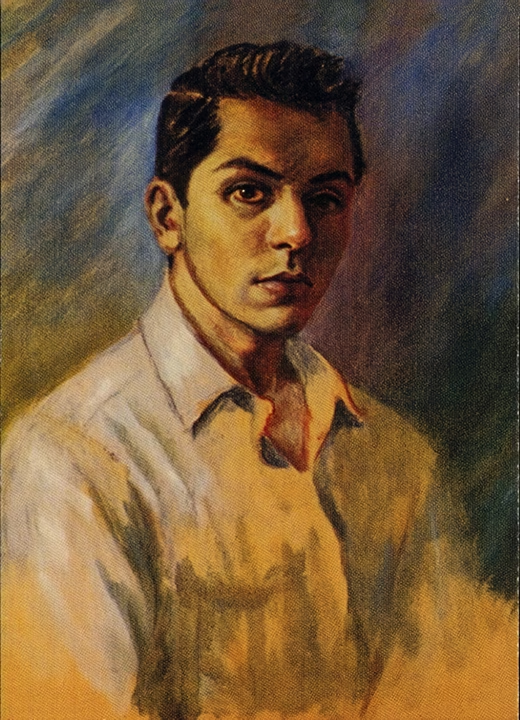
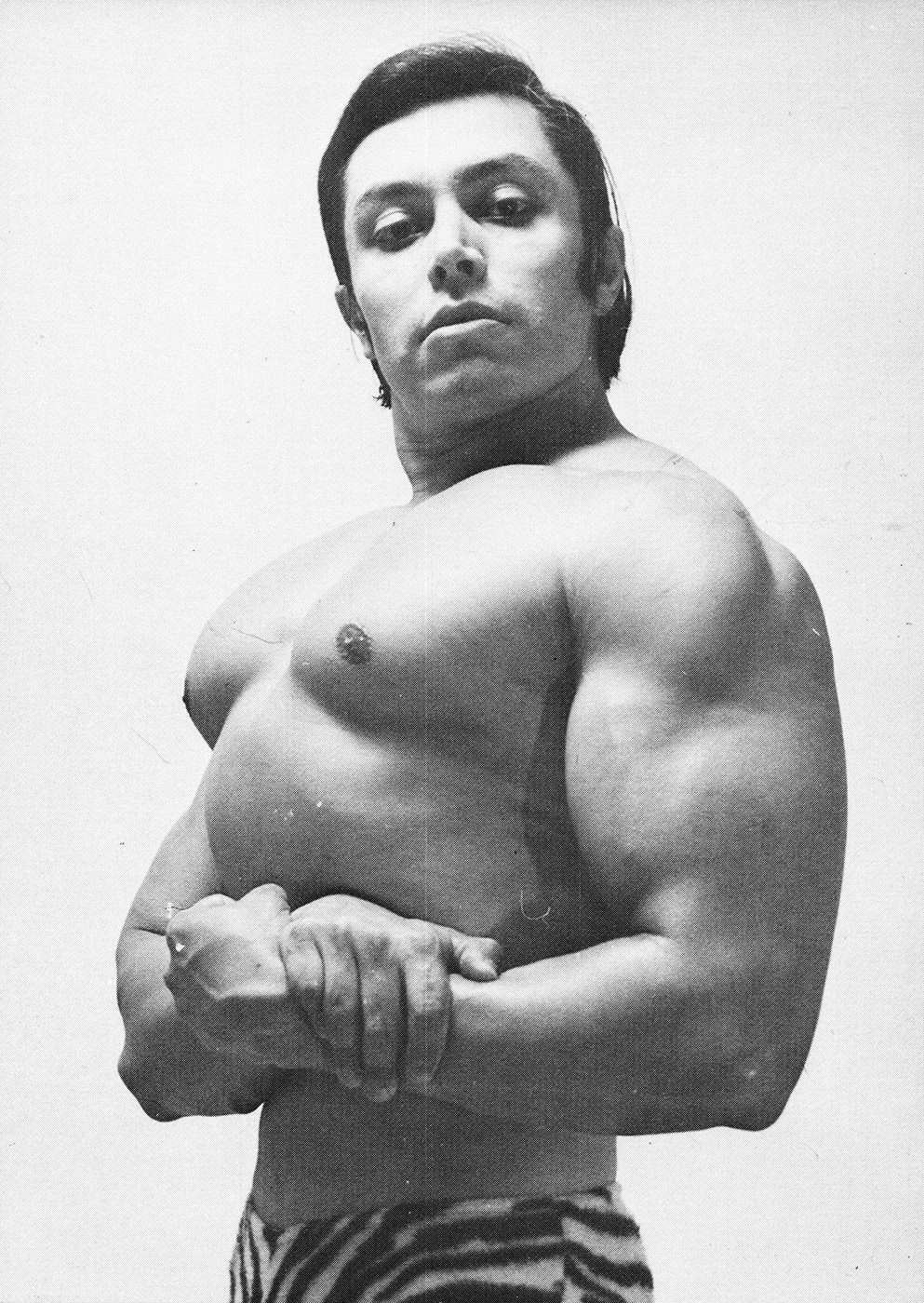
Towards the end of his adolescence Boris began transforming his physique through bodybuilding — a pursuit that ran parallel to, and would eventually inform, his art. The exaggerated, sculptural anatomy that became his trademark had its roots not in fantasy but in the gym.
After finishing high school he spent two years studying pre-med, working towards the career his father had hoped he would choose. When his father's health failed, circumstance forced a reassessment: Boris balanced his artistic calling with the need to support himself, taking full-time work as an illustrator for advertising agencies. The experience taught him layout, design, lettering and — crucially for what followed — how to work to a deadline. Despite real success as an illustrator in Peru, financial rewards were thin, and on the advice of an American art director he began to consider a future in New York.
On 13 September 1964 he purchased a one-way ticket to New York with just eighty dollars to his name. The leap of faith that began an American career
Boris’s journey to New York took fourteen hours by propeller plane, with stops in every country along South America’s west coast. He arrived at JFK at 1 a.m. and joined a taxi heading into the city. The driver was taking as many passengers as he could fit. With no hotel reservation—or anywhere else to stay—Boris could only tell him, “New York.” The driver dropped him in Times Square at 3 a.m. For the next two days, Boris rode the subway between Manhattan and Brooklyn, sleeping on board to save money on lodging. A chance encounter with fellow Peruvians eventually helped him find a place to stay and hear about Jorge Vera, a Peruvian artist working in Connecticut—and the very friend Boris had set out to find.
That connection led to a job in the advertising department of Interstate Department Stores. Within six months the department relocated to New York, taking its talented Peruvian illustrator along with it. There, a friendship with fellow illustrator Doris Maier — teasingly nicknamed "Boris and Doris" by their colleagues — blossomed into romance, and the two were soon married. But company policy forbade couples from working together, and when the employer threatened to dismiss Doris, Boris gave an ultimatum: if she could not stay, he would resign. The company refused to back down, and both Boris and Doris left.

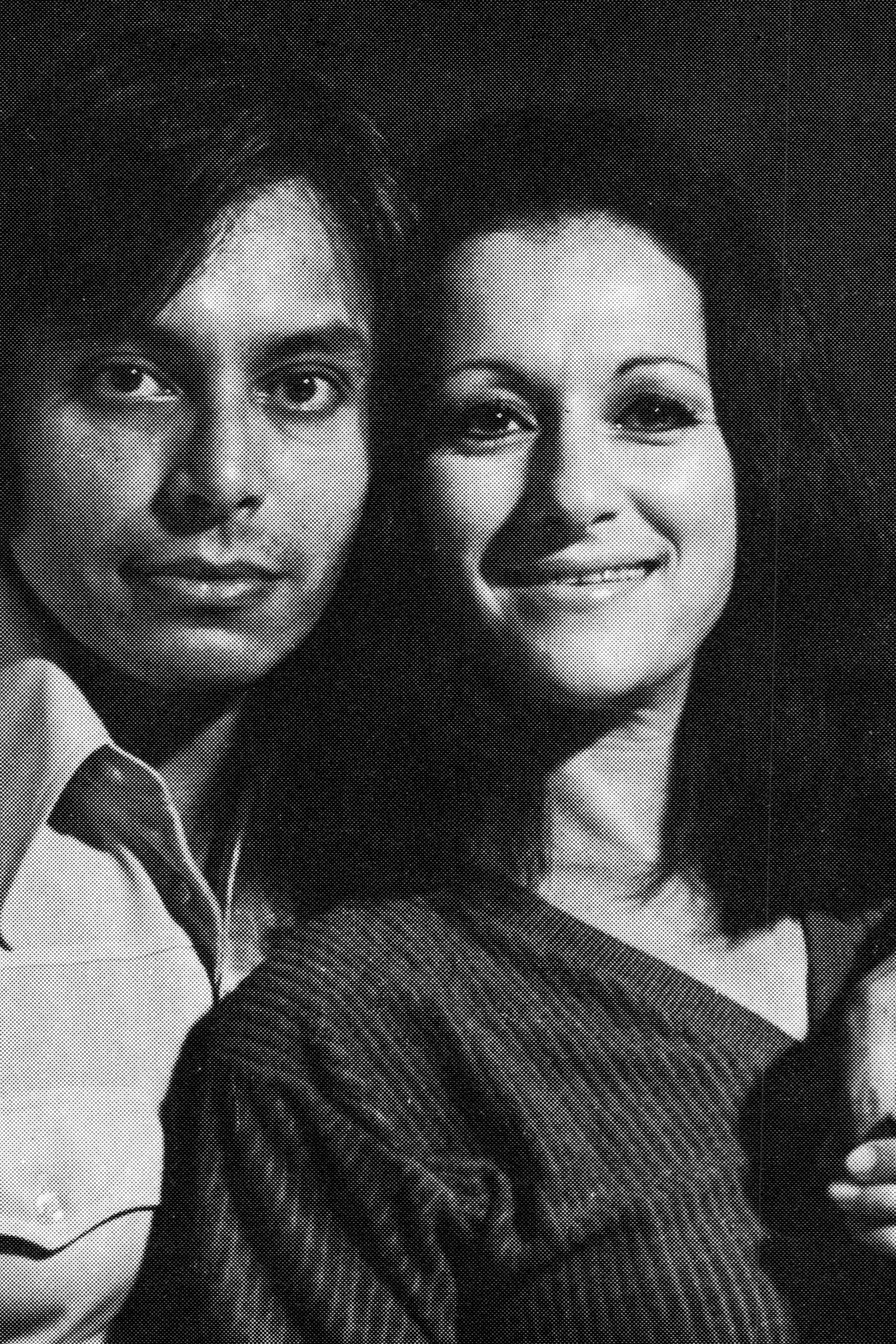
Now working freelance, one day, bored with the drudgery of bread-and-butter technical illustration, and ignoring his wife's insistence that he prioritise his paid work and meet his deadlines, Boris acted on an idea for a speculative "Monster" painting. Doris's attitude changed the moment it was accepted and published as a comic cover: a prolific career had begun.
The couple went on to collaborate directly, publishing several titles together — Enchantment, The Boy Who Saved The Stars, Mirage and Ladies: Retold Tales of Goddesses and Heroines — a family effort, with Boris supplying the illustrations and Doris the text, with their children Dorian and Maya modelling for many of the paintings. The marriage, and its twenty-five years of shared work, ended in divorce by the close of 1993.
A distinctive style — muscular figures, alluring heroines and otherworldly landscapes — quickly became Boris's trademark, and made him one of the most in-demand cover artists of the paperback era.
Boris Vallejo’s early comic covers marked the beginning of his rise in fantasy art. They introduced the dramatic anatomy, powerful figures and mythic intensity that would soon become his signature style.
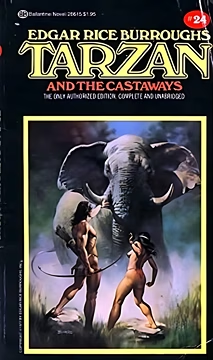
His covers for the Ballantine reissues of Edgar Rice Burroughs' Tarzan novels brought a savage, mythic energy to the apeman that critics compared to the golden age of pulp illustration.
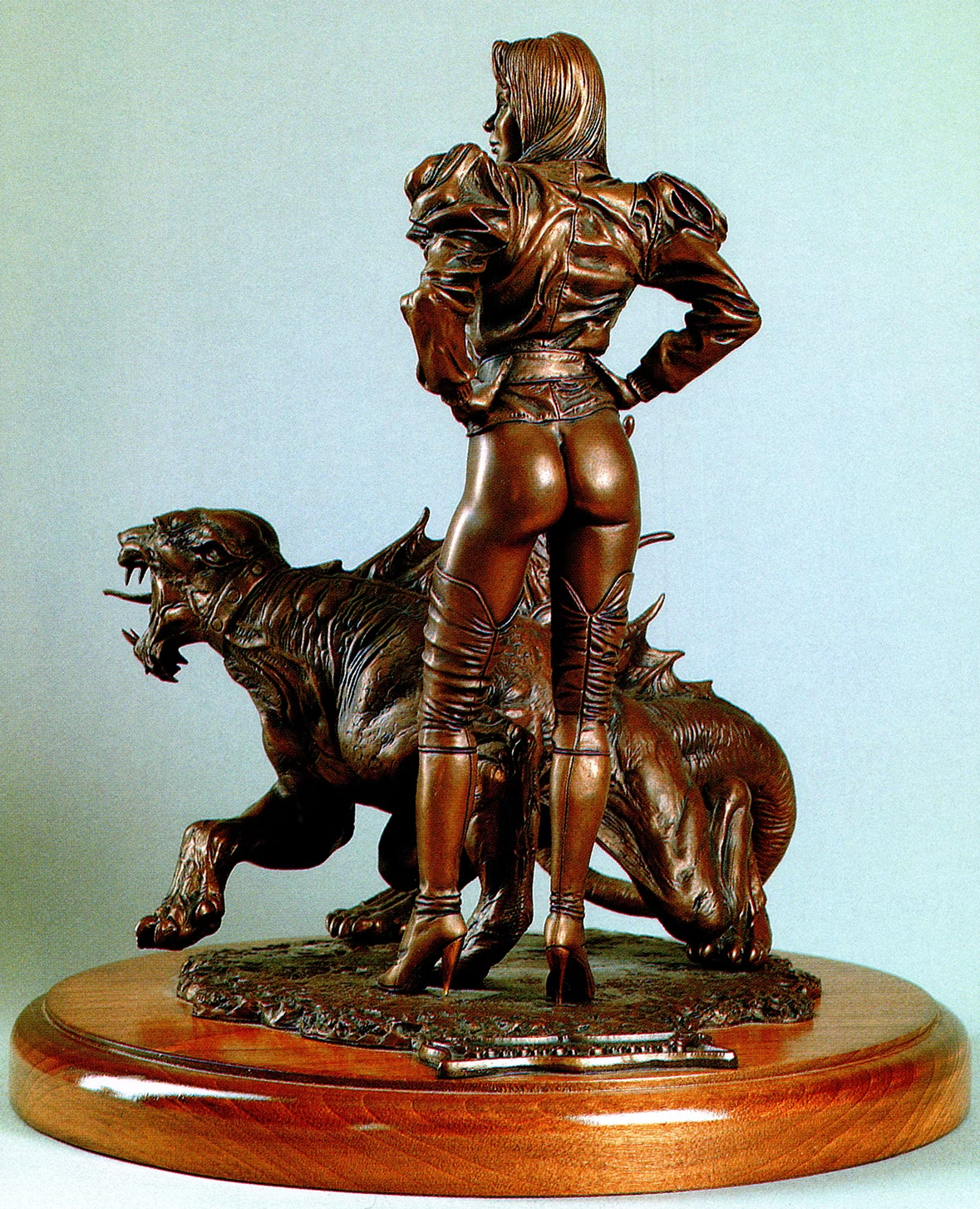
Boris Vallejo’s work for Franklin Mint brought his fantasy vision to collectible objects, including pocket knives, plates and other ornamental pieces. The commissions gave him room to explore richly detailed designs on unusual formats.
Vallejo brought out the wonder, mystery, and golden aura of the Tarzan books, their magic. Philip José Farmer, from his introduction to a Boris Vallejo Tarzan gallery
Boris's paintings are built on a disciplined, repeatable process — one Boris and Julie have shared in seminars, open studio days and their own painting guide books.
Wild ideas are tried out freely at the concept stage, before any serious time is committed, then tested against cooler reflection.
Photo shoots with costumes, props and posed models turn a rough idea into a convincing drawing ready to be transferred to board.
Quick colour studies work out value and balance in advance, saving time — and sometimes revisions — once painting begins.
Drawing remains the foundation of the Vallejo style: some pencil studies are considered complete works of art in their own right.
Decades into his career, Boris still attends life-drawing classes — the "touchstone" he credits for keeping his professional work honest.
From gessoed illustration board to the final varnish, follow every step of a Vallejo painting.
Painting technique →One of the occasional pleasures of interviewing artists about their work is getting to see the rough sketches, preparatory drawings and rejected ideas that lie behind finished paintings. Nigel Suckling, from Boris and Julie's collected sketchbooks
In 1989, as his marriage to Doris was drawing to a close, Boris's path crossed that of Julie Bell — a bodybuilder, model and aspiring artist. He became her mentor, sharing the techniques he had spent decades refining, and she proved a remarkably quick study, illustrating professionally within a short time.
Their collaboration deepened into marriage, and the pair set up matching easels side by side, listening to music and resting their brushes only for meals and trips to the gym. Meeting Julie marked a genuine turning point in Boris's art: he found in her his feminine ideal, and from then on it was strong women who became the central subjects of his work. The couple went on to create movie posters, video-game covers, music album art and much more, sometimes painting the same board together, passing it back and forth between their easels.
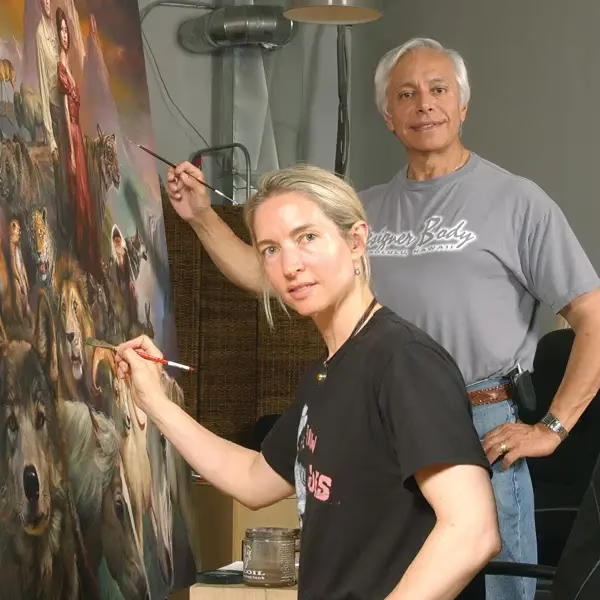
It is their meeting which marks a meaningful turning point for Boris. He found his feminine ideal in Julie, and from then on it was strong women who would be the star subjects of his paintings. Anthony & David Palumbo, introduction to Fabulous Fantasy Women, 2006
Six decades of work have brought Boris some of the highest honours fantastic art has to offer, and a body of work that continues to shape the genre.
Recognising his growing influence on comics and popular illustration.
Best Artist, for the painting The Amazon Princess and Her Pet.
Repeated recognition from science-fiction fandom and the fantastic-art community alike.
For Lifetime Artistic Achievement.
For Best Product Illustration.
Boris has generously shared his expertise with his own children, stepchildren and countless aspiring artists, several of whom have become successful professionals in their own right.
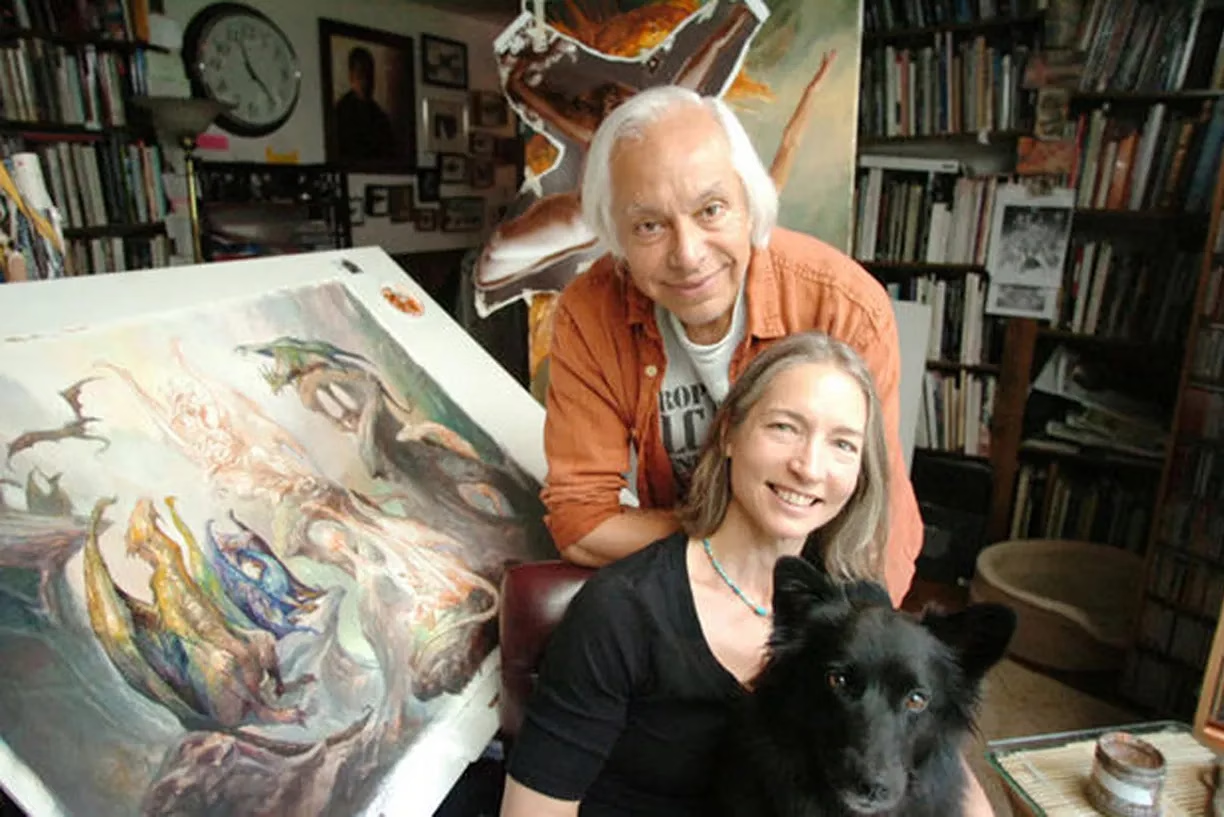
More than fifty years after his first comic cover was accepted, Boris Vallejo's legacy lives on in his vast body of work and in the artists he has helped shape. He has mentored his wife, Julie Bell; his children, Dorian and Maya, from his first marriage; and Julie's sons, Anthony and David Palumbo. All have become accomplished artists in their own right. Although age and health have curtailed Boris's ability to paint, he and Julie still work side by side when they can in their Allentown studio, sometimes collaborating on a painting and continuing to exhibit their work. By all accounts, they remain deeply devoted to the work they share.